Pattern 001 A Pattern Landscape
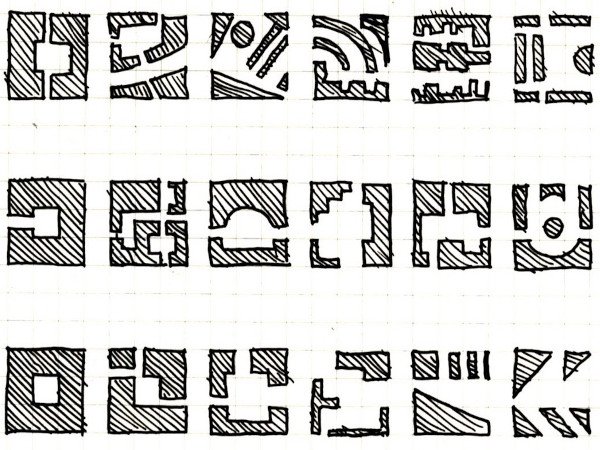
In 1977 Christopher Alexander, Sara Ishikawa, and Murray Silverstein published A Pattern Language. The book tried to define something like the human experience of space, and it did so through a long series of related though distinct typologies of encounter: 253 of them, from the scale of the region down to the placement of a window seat. Each pattern named a recurring situation, described the tension at its heart, and proposed a form that resolved it. Each nested inside larger patterns and contained smaller ones. Each came with criteria for success.
The idea was as elegant as it was optimistic. It was also anything but succinct, and, by my account anyway, endearingly naive in a way that can only be appreciated in hindsight. This was, after all, written in Berkeley a decade after the Summer of Love, with the expectation of a great coming-together of humanity still lingering in the air. That lingering was something like the foam that remains on the beach as a wave draws back out, even as it seeded much of the techno-optimism that was bubbling up further down the Bay in Palo Alto. A Pattern Language still believed that if you could only describe the human experience of space well enough and develop a human-scaled heuristic exhaustively enough, that unified world might not just be imagined, but made real.
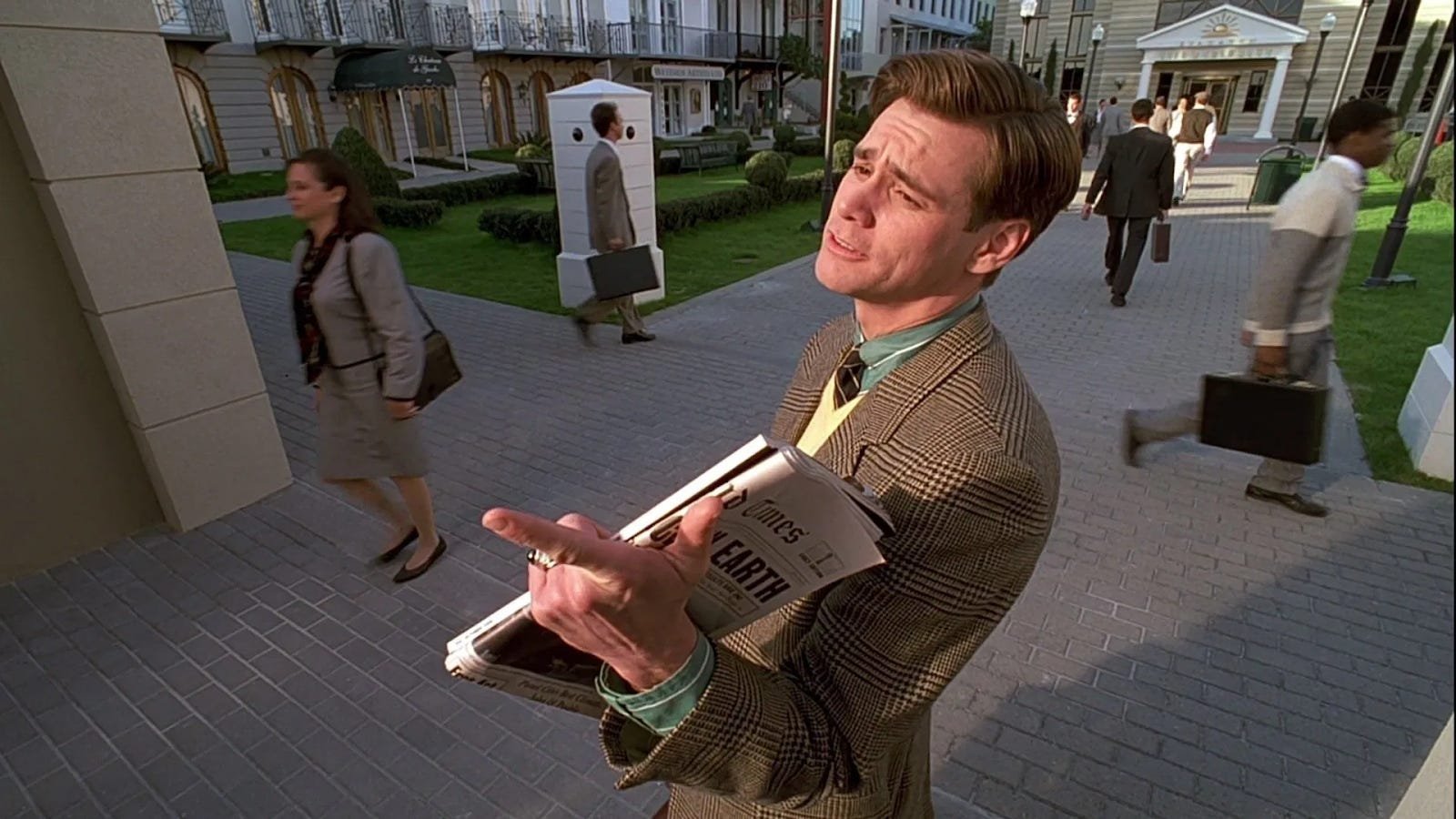
Its success as a design methodology is rightly debated and contested. It gave us Seaside, Florida, after all: not a direct application of the book, whose authors had no hand in it, but the most famous attempt at the same premise, which is that a town can be issued as a code and a set of approved forms and will then proceed to become a place. By most accounts it has been considerably more successful as the set of The Truman Show than as a place that most people want (or can afford) to live in. Uncharitable assessments of Seaside are too numerous to warrant a significant amount of space here, but one of the most pointed comes from Christine Macy in 1996, who declines even to grant it the dignity of conservatism: the nineteenth-century small town that Seaside so carefully evokes was never anybody's actual memory, so what the place manufactures is not a past but a nostalgia for one, which it then puts to work in the service of a utopia (we will undoubtedly re-visit this theme in future writings).
Its greatest impact, however, came both closer to home and from somewhere else entirely, in the seemingly unlikely and then still nascent discipline of computer science that was then washing up on, and has today largely consumed, the coast of Northern California.
Patterns for machines
Software, like a city, is a system too large for any one person to hold in their head, an object of accumulated labor built by many hands over time, and one in which local decisions can have global consequences. What software engineers needed, especially during the 1980s and 1990s, was a way to name recurring problems and their proven solutions so that the knowledge could be shared without being reinvented. Alexander had already written the format.
In 1987 Kent Beck and Ward Cunningham presented a short paper applying pattern languages to object-oriented programming. Seven years later a book called Design Patterns, written by four authors and so known as the Gang of Four, became one of the most cited texts in the field. Its form was taken over from Alexander with very little alteration: name the pattern, state the problem, state the forces at play, give the solution, note the consequences. When Cunningham later built a tool for programmers to collect and edit patterns together, he called it a wiki.

The first wiki was not built to be an encyclopedia, or a manual, or any of the things that wikis have since come to imply when we type it as an addendum to a Google search (i.e. "create blog wiki"). It was built in 1995 to hold a pattern language, on the assumption that a body of patterns is the sort of object that has to be written by many hands, argued over in the open, and revised without any particular end in view, which is to say on precisely Alexander's assumption about how a language of forms comes into existence in the first place. The container turned out to be the more portable idea. Within a decade it had become the default form for collaboratively written text on the internet, and the purpose it was built to serve had been more or less forgotten.
So the book meant to describe the experience of cities, courtyards, and entryways ended up as a heuristic for structuring computer code, and then, by way of the medium invented to hold that heuristic, as the template for how strangers create knowledge together online. One would be forgiven for thinking that this is an example of incidental domain transfer, but the truth is, in my read, much more interesting and I will be unfolding it here over the coming years.